How LIS Builds Employability Into the Degree
.jpg)
.jpg "Redesigning the MBA for Modern Leadership and Infrastructure")
Graduate employability is often discussed as if it were a single attribute: either you have it or you don’t. For LIS, that framing is too blunt to be useful. Employability is better understood as a pipeline: students develop skills and gain knowledge, gather evidence that both are relevant and valuable, and receive structured support to translate that evidence into opportunities.
To create that pipeline effect, LIS’s employability offer is carefully designed to be curriculum-integrated. It is not limited to end-of-degree careers advice; it is built through the degree experience itself, reinforced by acadmic coaching, practical internship experience, and targeted careers support.
Graduate outcomes: the headline and what sits behind it
LIS’s first undergraduate (BASc) cohort outcomes show 89% of graduates in skilled work and/or further study 15 months after graduation. Just as importantly, graduates are moving into a spread of sectors rather than clustering into a single destination: the largest share go into business and consulting, followed by research and data, sustainability and ESG, and tech and software, with others progressing to finance and investment, government and policy, and media and marketing, or entrepreneurship and sport and youth engagement.
This mix matters because it gives context to the headline figure: it suggests outcomes are being driven by transferable capability (and the ability to evidence it) rather than narrow occupational training. In other words, a strong “how” sits behind the percentage: repeated practice applying learning to real problems, credible outputs that can be shown to employers, and structured support that helps students translate what they can do into what employers can recognise.
A labour market shaped by skills signals
LIS builds employability against a national shift toward skills-based recruitment. According to the Institute of Student Employers, 58% of UK employers already hire for skills - a reminder that recruitment is increasingly driven by demonstrable capability rather than by credentials alone.
This has a direct implication for an interdisciplinary degree, and for graduates from all institutions, entering the labour market at a time of AI disruption and the possible shrinking of the graduate labour market. An interdisciplinary education with its corresponding breadth can be an advantage, but only if students make that breadth legible: what they can do, how they do it, and what evidence proves it. In practice, employability support needs to help students produce that evidence and tell that story clearly.
Employability through programme design
The LIS BASc is structured around tackling complex, real-world problems using interdisciplinary perspectives and methods. The point is not only to learn concepts,
but to use them, turning knowledge into outputs that are meaningful beyond the classroom.
A core mechanism is regular, timetabled coaching in small groups. This is where students are pushed to synthesise learning across domains, reflect on how their thinking is changing, and develop the habits that matter in work settings: problem definition, collaboration, judgement under uncertainty, and clear communication. In employability terms, coaching helps students do something many graduates struggle with: explain not just what they learned, but how they can work as a result.
Practical experience and targeted careers support
The LIS employability offering complements teaching and curriculum design with structured support that makes skills visible in employer-recognised ways:
- Internships and applied work: students work on real organisational problems in the curriculum and on internships that evidence their capability in real settings.
- One-to-one careers coaching: support is available to help all students define goals, prepare applications, and develop a coherent professional narrative.
- Networked employer engagement: brokered and facilitated interaction with employers and organisations helps students understand sectors and career pathways as well as role requirements and hiring processes.
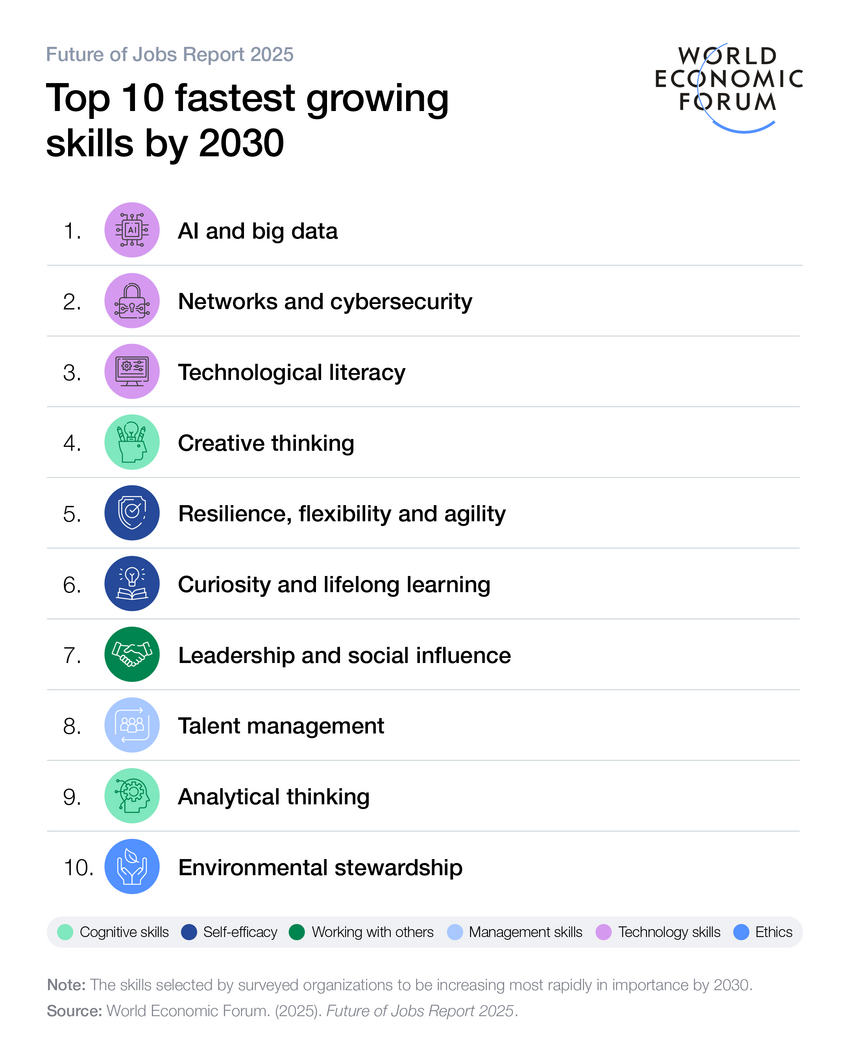
We also recognise that employability is a moving target, and map programme learning outcomes to forward-looking skills themes, including those set out in the World Economic Forum’s Future of Jobs reports. The intention is not to train students for a single first role, but to build durable capabilities - analytical and creative thinking, technological fluency, and adaptive problem-solving - that travel across sectors as roles evolve.
Widening participation and transition risk
A final dimension is transition support for students at higher risk of becoming NEET (not in education, employment, or training). At LIS, employability is strengthened when support is personalised and cross-functional, combining academic delivery, coaching, and careers interventions as a joined-up system rather than separate services.
What to take away
LIS’s employability offering works because it is an integrated system: the degree builds capability through interdisciplinary problem-solving; coaching develops synthesis and articulation; and practical experience plus careers support ensures students leave with evidence that employers can recognise. The outcomes data is remarkable, but the differentiator is the mechanism: employability is designed into the student journey, so graduates can demonstrate their skills, not merely claim them.
Share this story



Sign up for our newsletter
Don't miss out on important updates including course information, new announcements, Open Day dates and the latest LIS news.


.svg)

This is a comment related to the post above. It was submitted in a form, formatted by Make, and then approved by an admin. After getting approved, it was sent to Webflow and stored in a rich text field.