

Understanding the Drivers of Global Change.
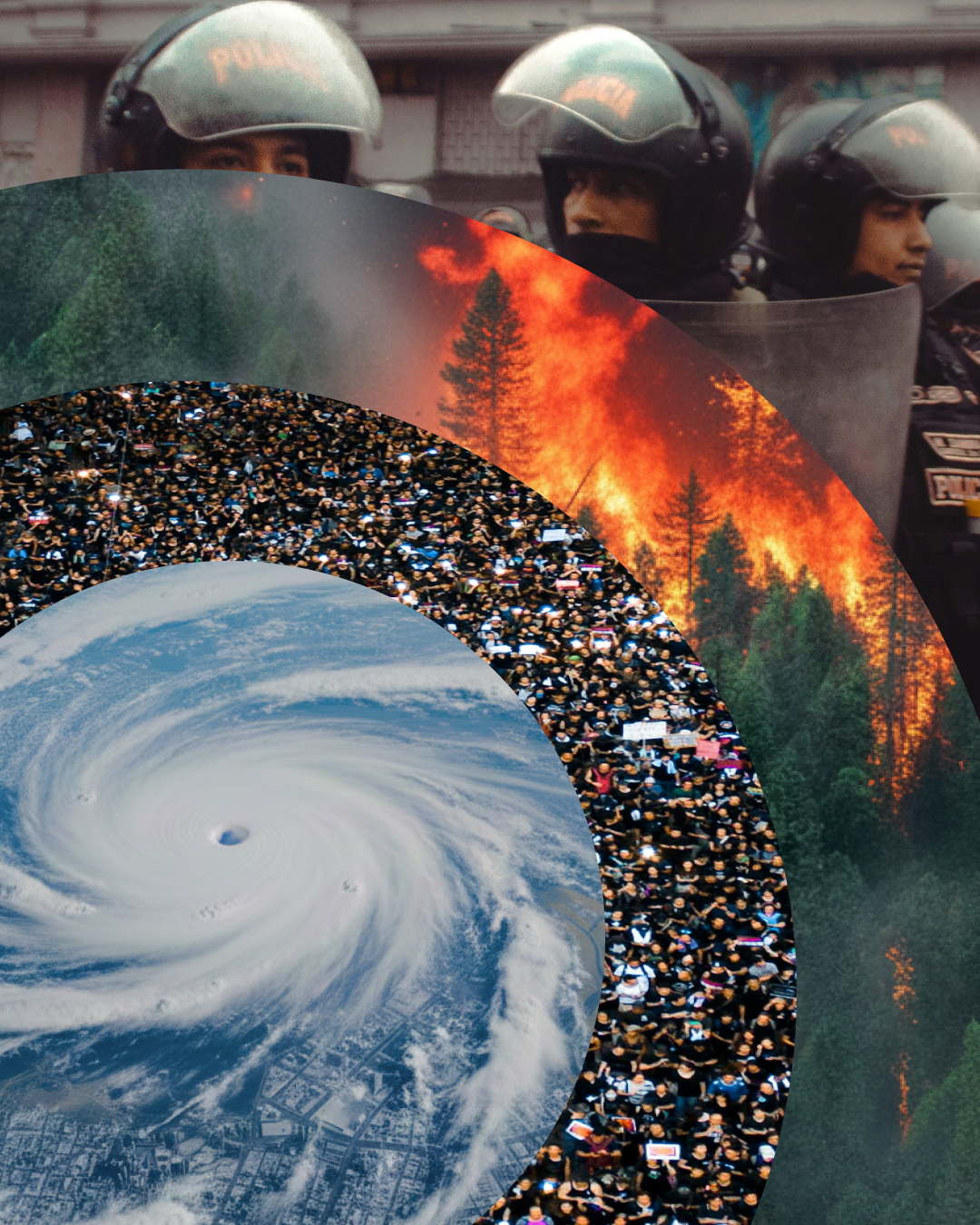
We live in an age of overlapping crises – climate breakdown, inequality, conflict, food insecurity and forced migration. Often described as the polycrisis, these challenges are interconnected and shaped by systems of power.
This short course explores how power, policy and economics drive global change, and how understanding them puts you in a stronger position to act.

Professional

TBC

4 weeks

£750

Discount available for self-funders, start ups and non-profits.

Online

1.5 hours per week
90 min online interactive sessions with self-paced prep.
Upcoming events


The world is becoming more complex, not less. Climate risk, geopolitical instability, green transitions and technological disruption are reshaping the systems we live and work within.
These crises are not isolated events. They are shaped by power: by financial systems, governance structures, institutions and hierarchies of knowledge. Understanding who benefits, who bears the costs, and how decisions are made is essential to navigating today’s environment.
This course offers a focused introduction to political ecology, equipping you to analyse how “hard” and “soft” power influence markets, policy and public debate. You will critically examine green governance tools such as carbon markets and certification schemes, and explore how access to knowledge shapes justice and outcomes.
For professionals, this insight is not just socially important, it is strategically valuable. Better understanding of power and systemic risk leads to better decisions.

This course is for professionals, policymakers, researchers and curious thinkers who want to better understand how power shapes today’s interconnected global crises.
%201.avif)
%20(2).webp)

.svg)
Who is this course for?
This course is designed for:
- Professionals navigating climate, governance or ESG challenges
- Business leaders seeking deeper insight into political and economic risk
- Policymakers and civil servants
- Researchers and students
- Anyone interested in the intersection of power, environment and socio-economic change
No prior knowledge of political ecology is required. Only curiosity and a willingness to question assumptions.
The course is evidence-based and non-partisan. All discussions are grounded in research and real-world case studies.
Structure of the course
This course is delivered fully online, making it accessible to participants based internationally.
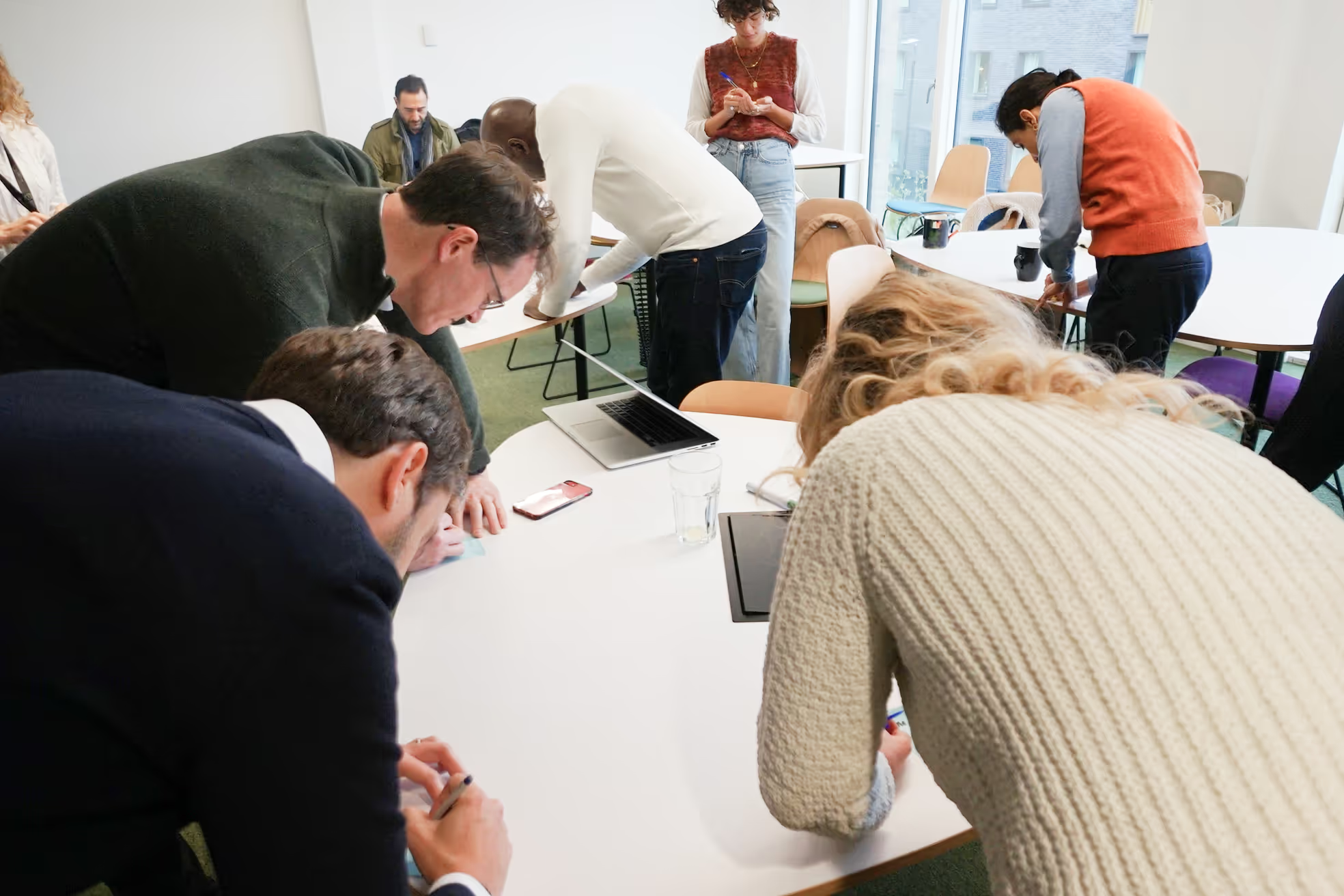
Teaching takes place across four live 90-minute sessions, held on Wednesday evenings over four consecutive weeks. Each session combines expert input with discussion and collaborative exercises, creating an interactive learning environment rather than a lecture-only format.
The format is designed to fit alongside full-time work, while still offering depth, rigour and space for critical thinking.
Across four interactive sessions, you will explore the structural drivers of the polycrisis and examine real-world case studies. You will leave with conceptual clarity, practical tools and new ways of analysing the systems you operate within.
Want the full picture? Download the brochure for a detailed breakdown of the course and session schedule.
.svg)
Dr Kay Khatun works at the science–policy interface across international contexts. Her research is multi-scaled and collaborative, using interdisciplinary approaches from both the natural and social sciences to examine the management and preservation of terrestrial and marine ecosystems through a political ecology lens. She holds a PhD in Geography from the University of Bristol, an MSc in Environmental Science with Legislation and Management from Brunel University, and a BSc in Physics from King’s College London. She advises governments, the private sector and civil society, and serves on multiple expert panels.

Analyse how different forms of power shape the systems you live and work within.
Critically assess governance tools for resource management and understand their limitations in practice.
Identify how hierarchies of knowledge influence decision-making and apply more inclusive analytical approaches.
Propose strategies for navigating and intervening in complex socio-environmental systems.


.svg)

