

Enterprise Leadership Programme
Cross-functional leadership training for people who already lead. Get the teams around you, each with different expertise, working together across disciplines.
Gain practical tools, interdisciplinary approaches, and the confidence to challenge existing mental models to drive cross-functional collaboration in your organisation.

Leadership education needs reinventing. You already know how to lead a team. The harder job is getting several teams, and several kinds of expertise, to work as one.


£2,000

20% off for non-profit and public sector organisations.

Hybrid
Self-paced learning & online workshops.
Two immersive days on campus.

5 sessions
Two in-person days to kick off and conclude the programme, with three 90-minute online sessions in between.
Upcoming events


Collaborative leadership for teams that cross disciplines
Your organisation's hardest problems sit between teams, not inside them. Solving them means getting engineers, analysts, designers, clinicians or policy specialists to pool what they know. This leadership development programme gives experienced leaders the tools to make that happen, drawn from interdisciplinary research.
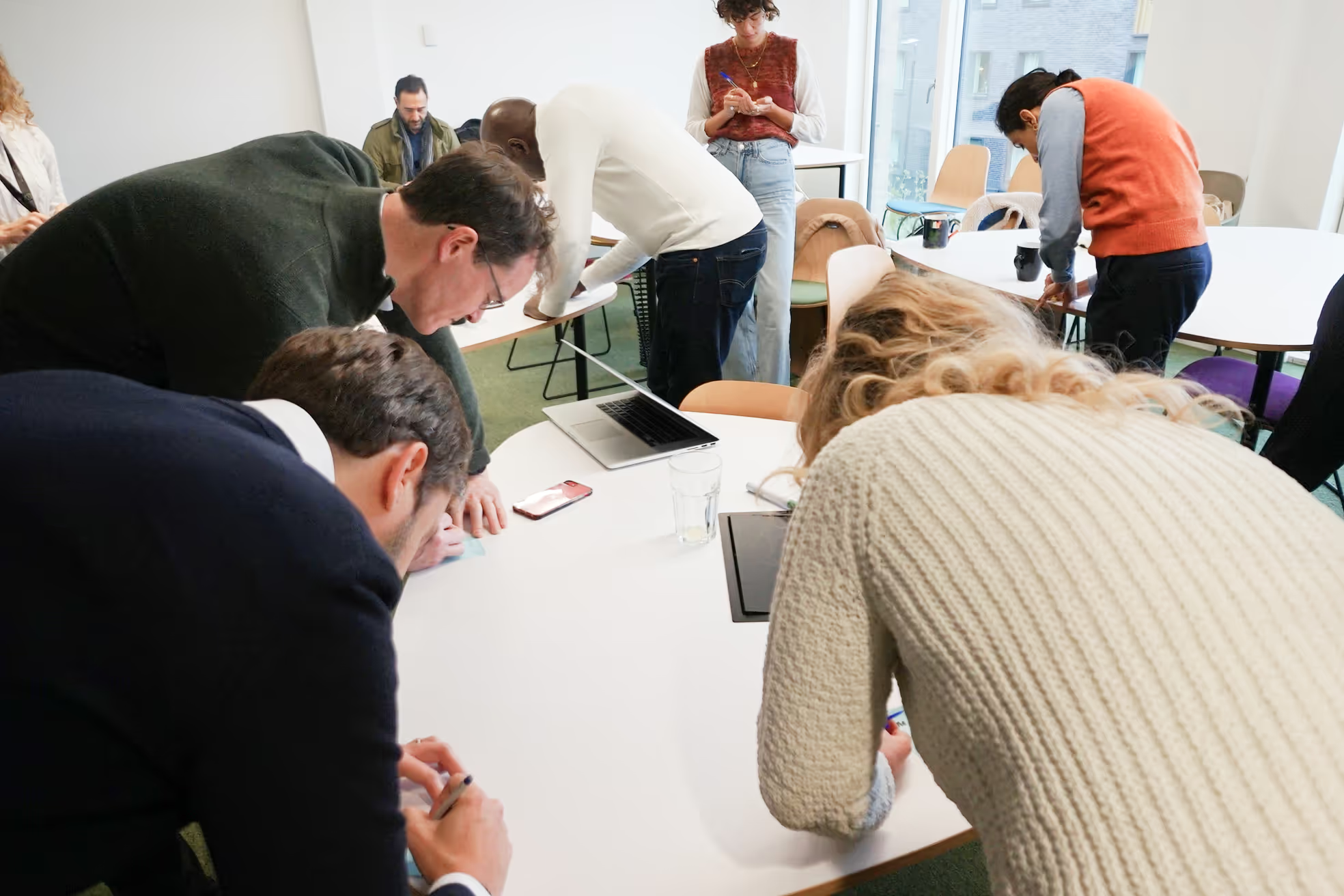

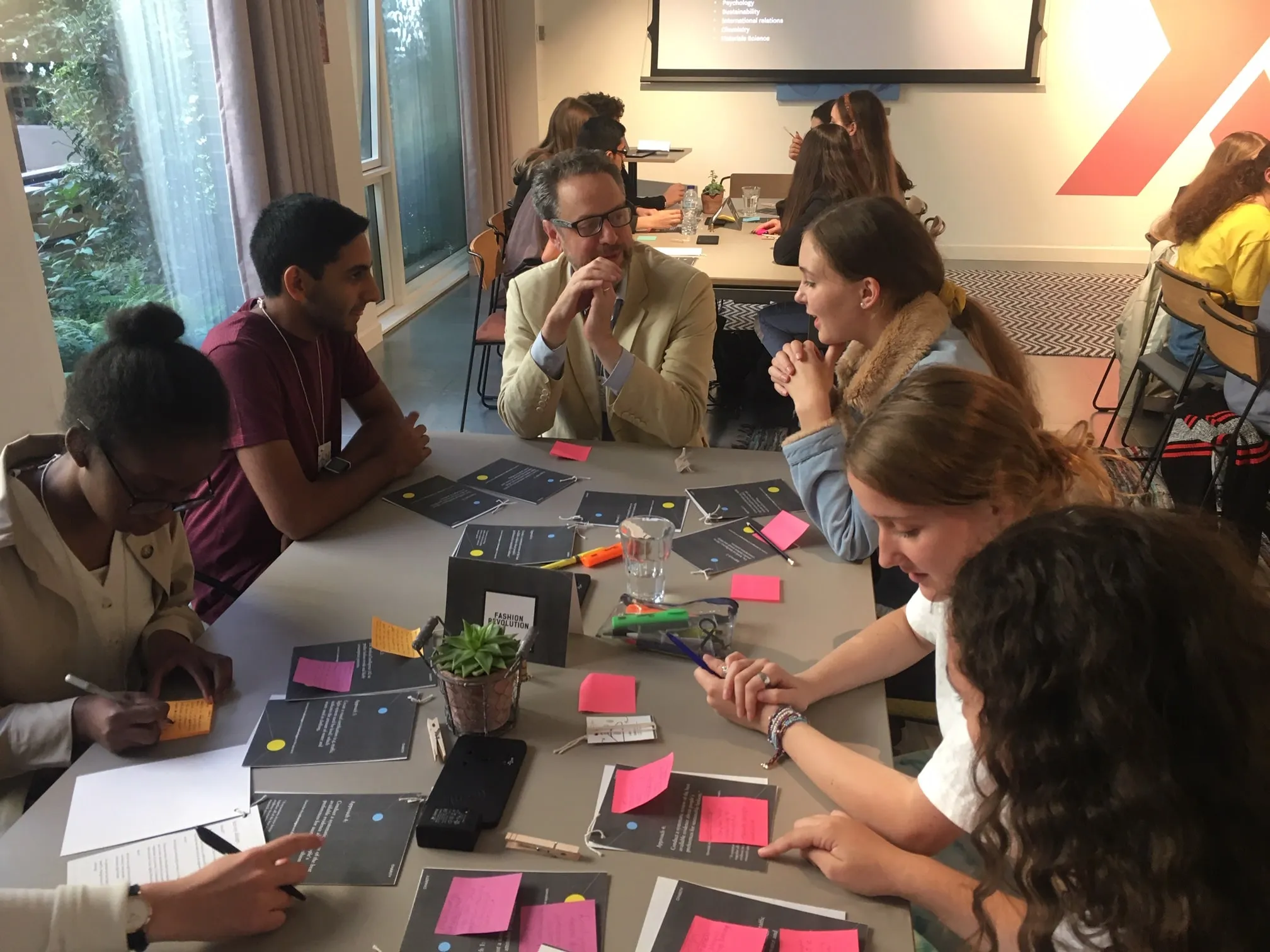




What is Cross-Functional Leadership?
Cross-functional leadership means leading people from different departments and disciplines, each with their own expertise, priorities and ways of working. The leader's job is less about doing the work and more about designing how those people work together, so the whole team becomes more than the sum of its parts.
A collaborative leadership style that scales
Most leaders learn to run one team well. Here you learn how to set up several teams, functions or specialists to collaborate: who needs to be in the room, how decisions get made, and how knowledge moves between people who think differently.
Tools to use with your team, not templates
Templates tend to break in complex settings. Instead you get principles and methods from philosophy, anthropology, behavioural science and systems thinking that you can take straight back to your team, and adapt as their work changes.
Why interdisciplinary leadership matters


Colin
CEO, Camphill Community Trust (NI)

"As a health charity director trying to tackle some big societal problems, I found the course invaluable. It introduced me to a wealth of new thinking and practical approaches that pushed and expanded how I do my work. I highly recommend this course to leaders seeking to make a meaningful difference. It goes beyond what a standard leadership course could do."

Julie Dodd
Interim Director, Blood Cancer UK
“I used to think I was a 'jack of all trades master of none'. LIS has given me confidence, a vocabulary, and a new source of energy to promote interdisciplinary thinking and leadership. I found the course illuminating, thought provoking and a catalyst for new ideas. I have a renewed sense of purpose and direction.”

Rebecca Brennan
COO, Kyan (Technology Agency)
“A perfect balance of academic theory alongside a suite of practical tools that I could take away immediately and use to support my day-to-day role. I would recommend it to anyone whose role involves transforming services or systems and working across organisations with multiple partners.”

Chris Taylor
Director of Comms, NHS Health Innovation Network

A community of leaders from every sector
The programme brings together experienced leaders who all face the same challenge: getting teams with different expertise to work well together.
Past participants have joined from Airbnb, Google, the Cabinet Office and Nesta, across tech, finance, government, the arts and the charity sector. Roles range from project leads to CEOs, with between 4 and 39 years of experience.
Their own backgrounds are just as varied, from biology and architecture to economics, law and osteopathy. Whether you work in the public, private or non-profit sector, you will learn as much from the room as from the faculty.





Learning outcomes
Team leadership skills for cross-functional work
Through workshop-style sessions in person and online, you'll test how you might apply interdisciplinary perspectives and tools to your own projects. Rather than providing templates, which can fall apart in complex environments, you'll leave equipped with a range of principles and interdisciplinary concepts drawn from academic theory.
You'll also receive a certificate of completion once you finish the programme.
Complexity
Grow your understanding of different kinds of complexity, resist oversimplification, embrace nuance, & identify the emergent properties of complex systems and problems.
Visualisation
Practise visual techniques for mapping systems and conveying ideas in ways that can be easily understood without the need for jargon or technical language.
Communication
Hone your awareness of how to communicate intentionally depending on your audience, and to manage people with different communication styles or types of expertise
Systems Thinking
Learn how to think in terms of systemic relationships, seeing beyond parts to the sum of their interactions.
Collaboration
Recognise opportunities for enhancing collaboration within a team by tapping into collective intelligence and running more effective meetings.
Problem-solving
Enable your team to tackle problems by defining and analysing them clearly.
Integration
Master interdisciplinary techniques in a professional context to synthesise multiple findings and various perspectives.
programme overview
How the programme works
Unlike most leadership training programmes, this one is built around your teams. Each run combines five of the leadership workshops below, chosen to cover the learning outcomes and leave room to apply them to a challenge in your organisation.
To find out more about what modules will be included in the next run, download the brochure.
Onsite session
at the LIS campus

90-min Online sessions
Onsite session
at the LIS campus
Gain the skills to lead people with different expertise and synthesise their different approaches to create maximum impact.
Your interdisciplinary faculty

You learn from researchers and practitioners across social science, philosophy, behavioural science and anthropology. Each one brings a different lens to the same question: how do you get people with different expertise to work well together?
Gain the skills to lead people with different expertise and synthesise their different approaches to create maximum impact.
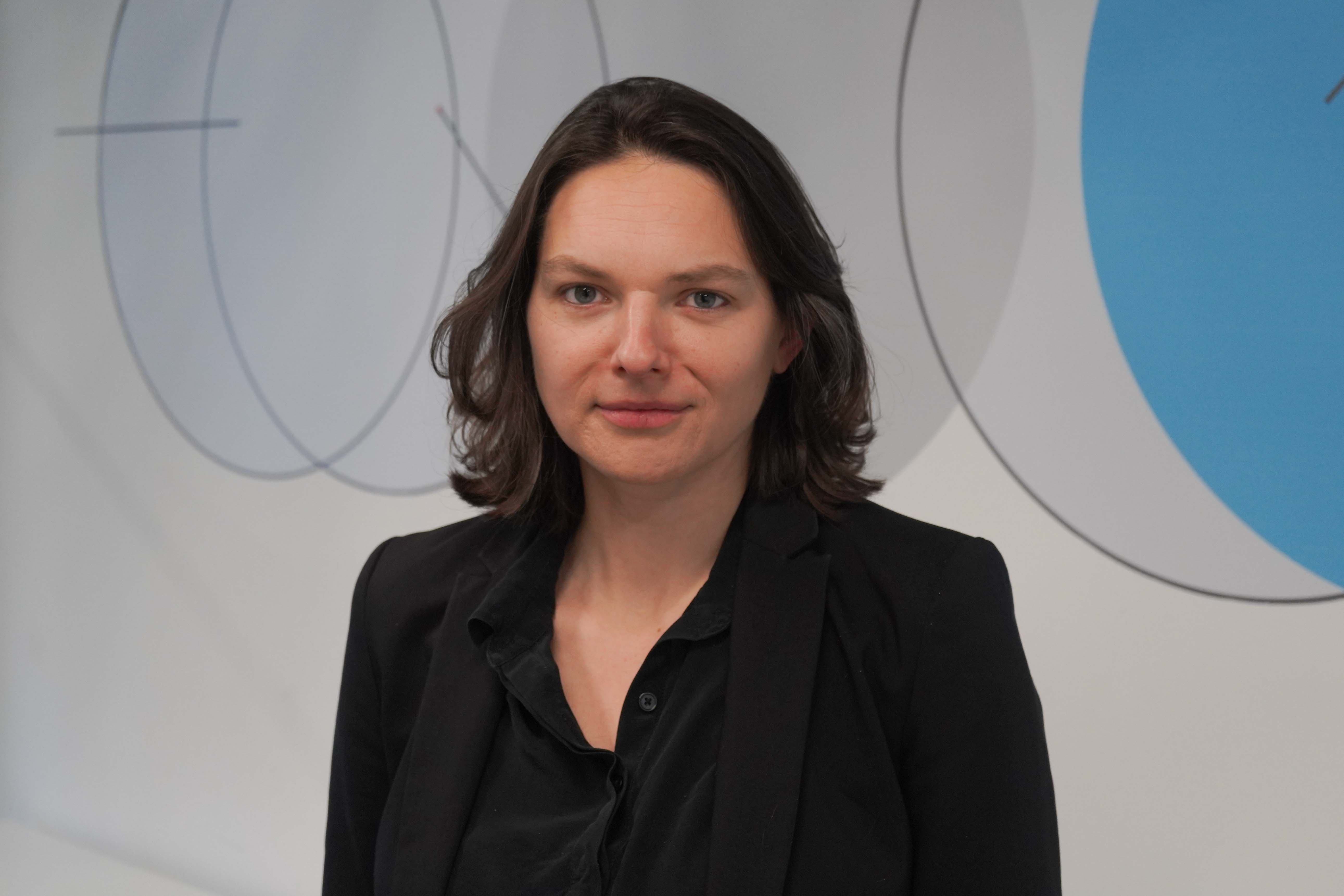
Amelia is a social scientist with a background in policy and consulting. She studies how education systems adapt to societal and economic change. Prior to LIS, Amelia taught in the Social Policy department at LSE. She received her PhD from Harvard and her BA from Oxford.

Mattia is a philosopher who lectured on social sciences at LSE prior to joining LIS. He has published on the notion of Collective Intelligence and its applicability to the modern workplace.

Niccolò is a behavioural and data scientist with a DPhil from Oxford, researching collective intelligence and how groups become smarter than individuals. He is calso o-founder and Chief Scientist of PSi.

Founder of the DaVinci Network, Waqās wrote "The Polymath" (Wiley 2019) and created the Polymath Festival. His research focuses on human diversity and performance. He holds degrees in Economics, International History, and Neuroscience, and has worked in diplomatic journalism and visual art.

Kaysara works at the science-policy interface, using interdisciplinary approaches to manage terrestrial and marine ecosystems. With a PhD in Geography and expertise spanning natural and social sciences, she advises governments, private sectors, and civil society on ecological preservation.

Adam is a quantitative anthropologist applying data science to human behaviour, having taught at Oxford as Departmental Lecturer in Cognitive and Evolutionary Anthropology, with degrees from Cambridge, UCL and Oxford.

David is a challenger, facilitator, synthesizer, and adviser who, for the last four decades, has been founding, leading and working with and in local, national and international organisations and systems to solve complex problems and respond to social, economic, technological and cultural changes.

Charlotte leads partner collaborations, the LIS Network, and business development for LIS short courses, drawing on a career across arts, social change, healthcare and charity work, previously at the Young Vic and the RSA.
Who it's for
Senior leadership training for people who already lead.
This is not an introduction to management. It is for experienced leaders, from managers, heads of department to directors and CEOs, who lead teams or functions made up of different specialists. You already know how to run your own team. This programme is about getting several teams and disciplines to work together, and giving them the tools to do it without you in every room.
Past participants include charity directors, NHS communications leads, COOs and programme leads, from organisations such as Google, the Cabinet Office, Nesta and Blood Cancer UK.
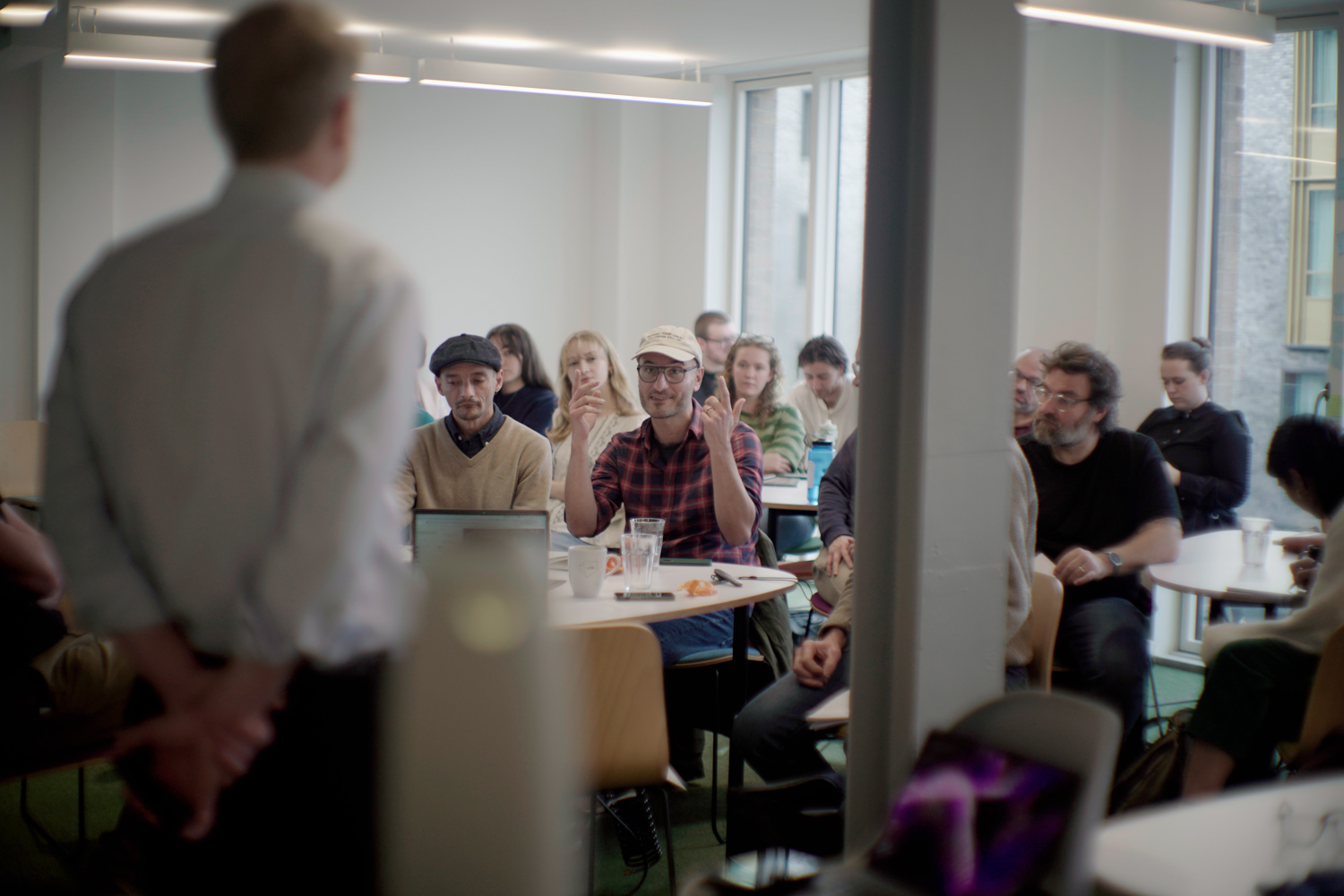
Bring a challenge your teams are facing
You will get the most from the programme if you bring a real cross-team challenge from your organisation. Participants often arrive asking:
- How do I get specialists from different functions to actually work together, not just meet?
- How do I combine different kinds of insight from across my organisation into one decision?
- How do I build buy-in and momentum across departments for a new initiative?
- How do I better leverage the intelligence of a collaborative team?

Who you are

You already lead a team, a function, or other leaders
The people you lead bring different expertise, or you need several teams to work together
You work in a complex, mission-led organisation in the public, private or charity sector
You want practical methods to use with your teams, grounded in research
You are open to new perspectives and want to help shape the future of leadership education

When is the next cohort?

The next start date is [TBC]. Register your interest and we will let you know as soon as dates are confirmed.
How does it compare with other leadership training courses in the UK?
It is shorter and more affordable than most business school programmes, and it draws on interdisciplinary research and collective intelligence rather than a single leadership model. You learn alongside leaders from very different sectors, which is part of the point.
Can my employer pay?
Yes, your organisation can pay for your place. Download the brochure to share with your line manager or L&D team.
Do I get a certificate?
Yes. You receive a certificate of completion from the London Interdisciplinary School when you finish the programme.
How much does it cost, and are there discounts?
The fee is £2,000. You can save 20% with the early bird rate if you apply before [TBC date]. Non-profit and public sector organisations also get 20% off. [TBC: whether the two can be combined]
Is it an online leadership course?
It is hybrid. The two in-person days open and close the programme, and the three sessions in between are live online, so you can fit them around work.
How much time does it take?
Five sessions: two in-person days on our Whitechapel campus in London, with three 90-minute live online sessions in between. [TBC: add expected self-paced study time]
How is it different from other executive leadership training?
Most executive leadership training focuses on you as an individual leader. This programme focuses on the teams you lead, drawing on research from philosophy, anthropology and behavioural science to help them work across disciplines.
Is this leadership training for managers?
It is for managers who already lead teams, not people new to management. If you are responsible for getting several teams or specialists to collaborate, it is designed for you.
Who is the Enterprise Leadership Programme for?
Experienced leaders who lead teams, functions or other leaders, and need people with different expertise to work together. Participants come from the public, private and non-profit sectors.


